Senior Healthcare Products on Clearance 2026 How to Find Safe Savings
Anúncios
A practical guide to safer healthcare savings
A clearance sign can make a healthcare product look like an easy bargain. But a low sticker price tells you little about whether the item is suitable, complete, within its usable date or covered by a warranty. The safest way to shop is to decide what the person needs first, then compare the total cost and condition of products that actually meet that need.
Anúncios
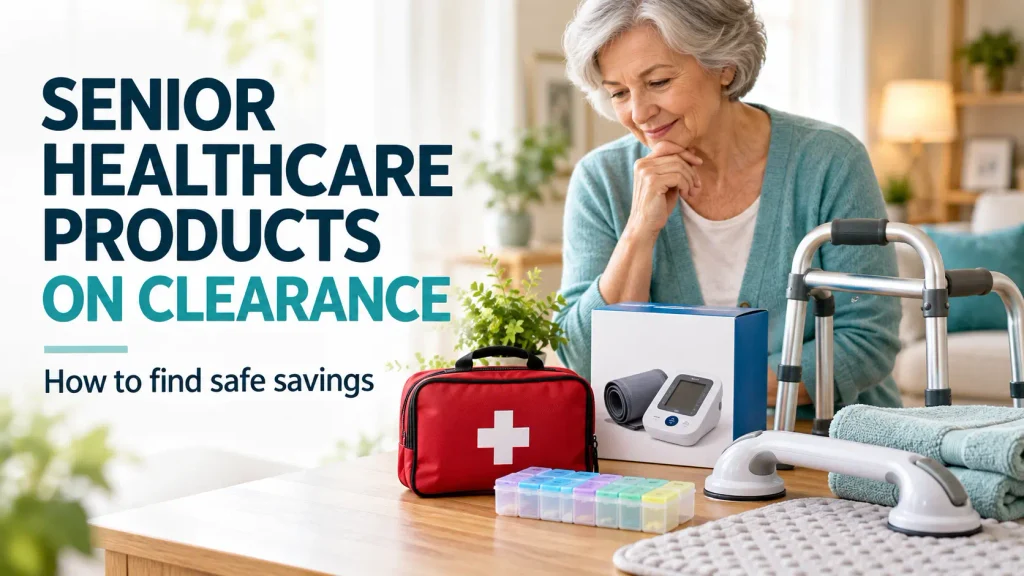
This guide covers common home-care and daily-living products, from grab bars and pill organizers to walkers and home-use devices. It explains what is reasonable to buy on clearance, when to ask a clinician or pharmacist, and why a discounted product sometimes costs more than one supplied through a health plan. It does not recommend any particular treatment or guarantee that an item will be on sale.
What does clearance mean for a healthcare product
Clearance usually means a retailer wants to move remaining stock. Packaging changes, discontinued colors, seasonal inventory or shelf space can all explain a markdown. It does not prove that an item is defective. It also does not prove that the item is appropriate for your needs.
Anúncios
Ask why the price is reduced when the answer matters. An unopened bath mat in an older color is different from an opened blood-pressure monitor with a missing cuff. “Open box,” “refurbished,” “final sale” and “damaged package” describe different conditions. Read the exact listing, inspect the item if possible and keep the receipt and product information.
Clearance does not automatically remove consumer protections, but returns and warranty coverage can vary by retailer, manufacturer and item condition. Check the terms before paying, particularly for equipment that might need sizing, installation or training.
Start with the need not the discount
Write down the problem the product should solve. Is someone trying to reduce slipping in a bathroom, measure blood pressure at home, move safely between rooms or organize daily supplies? A clear purpose helps you avoid buying an attractive but unsuitable gadget.
Next, record the practical requirements: size, weight capacity, power source, replacement parts, cleaning method and space available in the home. For a mobility item, think about the person’s height, grip and typical walking surface. For a monitoring device, consider display size, ease of use and whether a healthcare professional has recommended a particular type. For anything that affects treatment, do not substitute a product solely because it is cheaper.
If a clinician prescribed equipment or gave specific instructions, check those requirements before buying a clearance alternative. The correct fit and setup matter more than a sale label. A physical or occupational therapist, pharmacist or equipment supplier may help with an item that needs fitting or training.
Products that may be worth comparing on clearance
| Product type | Potential value | Check before purchase |
| Bath or home-safety accessories | An unopened item may be reduced because its design or packaging changed | Installation requirements, grip, dimensions, weight rating and return terms |
| Pill organizers or storage aids | Simple non-medicated accessories can be inexpensive | Compartments, labels, ease of opening and whether the design matches the medication schedule |
| Reusable daily-living aids | Reachers, cushions or dressing aids may offer modest savings | Comfort, cleanability, size and product condition |
| Home monitoring devices | Some older models may be discounted | Correct device type, complete accessories, instructions, warranty and compatibility |
| Mobility equipment | A markdown can reduce a large purchase cost | Professional guidance, fit, brakes, stability, assembly and replacement parts |
| Consumable supplies | Bulk or end-of-line stock may have a lower unit price | Expiration date, sealed packaging, storage instructions and realistic use before expiry |
The table is a screening guide, not a list of items everyone should buy. A device used to monitor a medical condition deserves more careful review than a storage basket. Products that touch the skin, enter the body or must remain sterile require particular attention to sealed packaging and dates.
Check dates and seals on consumable products
Never let a discount override an expiration date. The Food and Drug Administration advises against using expired medicines because they may be less effective or risky. If a clearance shelf contains an over-the-counter medicine, read the active ingredients, warnings, storage directions and expiration date. Buy only an amount you can reasonably use while it remains in date. Ask a pharmacist if the medicine is appropriate alongside existing prescriptions or conditions.
Test strips and other health supplies may also have specific storage and use-by requirements. Check the package for the correct device model and for evidence that it has been opened, damaged or exposed to heat. A low unit price is not a saving when much of the stock will expire before use.
Be wary of relabeled, unsealed or missing packaging. Without the manufacturer’s instructions and identifying information, it can be harder to use the product correctly or check a recall. For a personal-care item, consider whether the package can be cleaned and whether the seller will accept a return if it is unsuitable.
Think twice about openbox or used medical devices
A used or open-box item can save money, but it creates questions that a sealed new product may not. Has it been cleaned and inspected? Are the charger, tubing, cuff, batteries, manual and other required parts included? Is it the correct model? Can you obtain replacements? Does the manufacturer warranty still apply to a second owner or clearance purchase?
Some devices are intended to be used only with a prescription, specific setup or ongoing support. Do not buy one simply because it appears in a general marketplace. The FDA advises people buying home-use devices online to use reliable sources and provides a public recall database. A recall check can be especially useful when buying an older model or secondhand unit; match the exact model and identifying details, rather than relying on a seller’s general description.
For devices that affect breathing, medication delivery, blood glucose management or other treatment, discuss the exact product with the treating professional before making a substitution. A low price is not evidence that the device is suitable or safe for that person’s care plan.
Compare the full cost of a deal
The displayed price is only one part of the bill. Add shipping, taxes, assembly, installation, replacement batteries, filters, accessories and future consumables. A device with cheap upfront pricing can be expensive to operate if proprietary supplies cost more or are hard to find.
For example, imagine a monitor marked down to $35 that needs a $30 replacement accessory and has no useful warranty. A complete new package costing $65 may be the better value. These figures are illustrative, not current store prices. The right comparison is between products that perform the required task with the accessories included.
Check whether a recurring subscription or app is needed for the feature you want. Also consider the cost of returns. A heavy chair or mobility device may be costly to ship back, especially if the seller’s clearance policy makes the buyer pay return freight.
Check coverage before paying cash for equipment
For a person with Medicare, some medically necessary durable medical equipment may be covered under Part B when its conditions are met. Medicare lists examples such as walkers, wheelchairs, hospital beds and certain glucose-monitoring supplies. Coverage is not based merely on age, and the type of equipment, medical order, supplier and plan details all matter. Some covered equipment may be rented rather than bought.
Before purchasing an expensive item off a clearance shelf, ask the healthcare provider whether it should be ordered as durable medical equipment. Then check the plan’s rules and whether the supplier is enrolled and accepts assignment when relevant. A retail clearance purchase made without following coverage requirements may leave you paying the full amount yourself. Conversely, an inexpensive everyday accessory may not qualify for coverage at all.
Do not assume that a retailer’s “Medicare eligible” label guarantees payment. Get the exact product, supplier and order requirements confirmed for the person’s coverage. If the person uses a Medicare Advantage plan or another insurance arrangement, the network and authorization rules can differ from Original Medicare.
A quick checklist for the store or product page
- Match the product to the need. Verify size, features, weight capacity and any clinical requirement.
- Identify the condition. New and sealed, open box, refurbished and used items need different levels of inspection.
- Read all dates and labels. Check expiration, model number, manufacturer and storage instructions where applicable.
- Inspect what is included. Confirm accessories, instructions, power supply and parts needed for first use.
- Check recalls and support. Look up the exact model if it is an older or higher-risk device; confirm replacement parts are available.
- Review the return and warranty terms. Ask who pays for return shipping or repairs and keep written terms.
- Calculate the real total. Include supplies, installation, subscriptions, shipping and tax.
- Check coverage if appropriate. For prescribed equipment, compare cash purchase with the plan’s approved supply route.
If a seller cannot answer basic questions about a high-risk item, pause the purchase. A limited-time price should not force a rushed decision about a product someone will rely on for health or safety.
Where to look and how to judge a seller
Clearance stock may appear at pharmacies, home-care suppliers, big retailers and online stores. A familiar seller can make returns easier, but reputation alone does not replace product checks. Compare the model number and included contents across listings. Read the current terms for that item rather than assuming a store’s usual return policy applies to all clearance goods.
For an unfamiliar online seller, the Federal Trade Commission recommends checking who is behind the site, how to contact them and whether customer complaints raise concerns. A professional-looking page or “doctor recommended” badge is not proof. Avoid sellers promising that one product cures many unrelated conditions. Health claims should be supported, and personal testimonials do not establish that a device will work for you.
Use a payment method that provides a clear transaction record. Keep screenshots of the product description, condition and return terms at the time of purchase. These records are useful if the delivered item differs from the listing.
When the clearance price is not worth it
Walk away from an expired medicine, broken seal on a sterile product, missing essential component, unclear model number or device that cannot be fitted to the user. Be equally cautious when the price depends on buying far more consumable stock than can be used before its expiration date.
A product is also a poor bargain when it creates extra risk or complexity: a walker that is too wide for the hallway, a monitor with an unreadable display, a heavy device that cannot be returned, or a replacement part that is no longer sold. Sometimes the correct next step is to ask a professional for the proper specification, then shop with that information.
Common questions
Are clearance healthcare products safe
Some are suitable, but “clearance” by itself does not establish safety or suitability. Inspect the condition, dates, instructions and fit, and get professional guidance for products that affect treatment or mobility.
Can I use an expired overthecounter medicine if it was cheap
No. The FDA advises against using expired medicines. Check the date before buying and do not use a product after it has expired.
Is an openbox bloodpressure monitor a good deal
Only after confirming the right monitor and cuff, complete parts, working condition, instructions and warranty or return options. Ask a healthcare professional which type of monitor is suitable if home readings guide care decisions.
Will Medicare pay for an item I buy on clearance
Do not assume so. Coverage depends on the product and Medicare rules, including medical necessity, orders and supplier requirements. Check before buying if you expect reimbursement.
How can I tell whether a markdown is real
Compare the exact model and included accessories with current listings, then calculate the total cost. A percentage-off sticker is less useful than the final price of a complete, suitable item.
The best way to use a clearance sale
Shop with a written list and a few non-negotiable requirements. Buy simple, low-risk products when the condition and terms are clear. Slow down for equipment that requires fitting, affects treatment or may qualify for coverage. A worthwhile clearance purchase solves the right problem at a lower total cost, without giving up the product support or safety the person needs.
Editorial note: This article was reviewed on 2 October 2026. Product prices, retailer policies and coverage decisions vary. For treatment-related purchases or equipment specified by a clinician, confirm the exact product with a qualified professional before buying.